

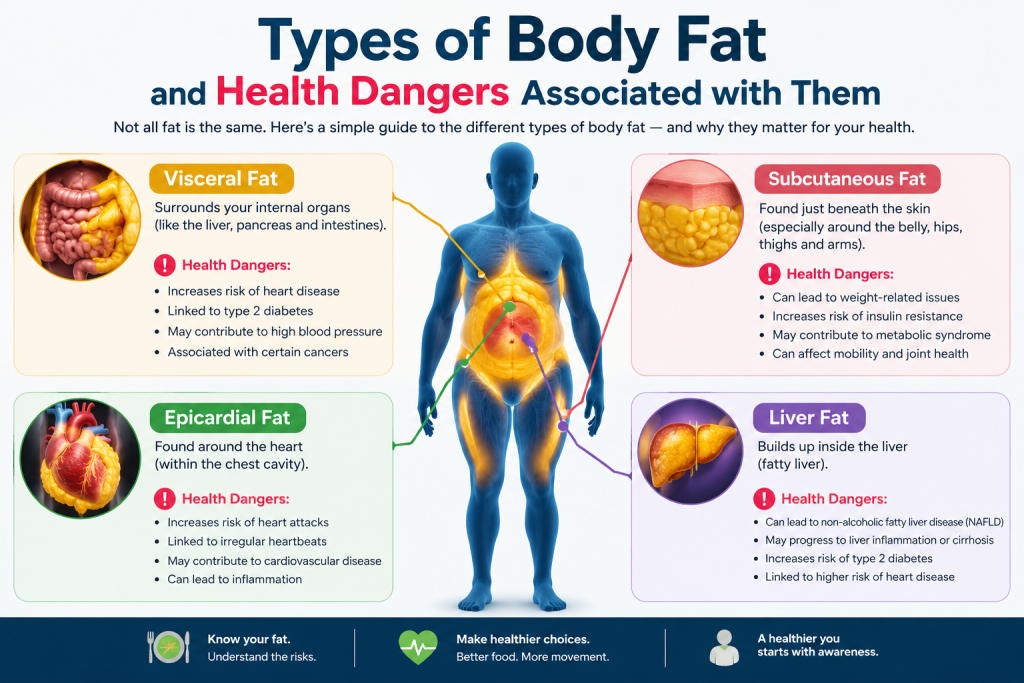
Body fat is often treated as something that should simply be eliminated, but the reality is more complicated.It provides energy, helps protect organs, supports cell function, and plays a role in hormone production. The real goal is not to remove all fat, but to maintain a healthy level of body fat while preserving muscle and supporting overall health.
For anyone working toward better fitness, understanding body fat can make fat-loss goals more realistic and sustainable. Instead of relying on extreme diets or quick fixes, a combination of balanced nutrition, regular physical activity, strength training, adequate sleep, and consistent habits can support healthier body composition.
What Is Body Fat?
Body fat is stored energy within the body. It is mainly stored in specialized fat cells and serves several important functions. Some body fat is necessary for normal physiological processes, while excess body fat can increase health risks.
Two commonly discussed types are subcutaneous fat and visceral fat.
It is the type of fat that you can usually pinch and see around areas such as the abdomen, hips, thighs, and arms.
Higher amounts of visceral fat are associated with a greater risk of several chronic health problems.
This is why body composition matters—not simply the number shown on a weighing scale.
Why Does the Body Store Fat?
The body stores fat when it receives more energy from food and drinks than it uses over time. However, body weight and body composition are influenced by many factors, including food intake, physical activity, sleep, genetics, medications, age, and lifestyle.
A consistent energy surplus can contribute to increased body fat. On the other hand, reducing energy intake while maintaining appropriate nutrition and activity can help create the conditions needed for fat loss.
This does not mean that every calorie needs to be counted forever. For many people, improving food quality, controlling portions, increasing activity, and developing consistent eating habits can make a meaningful difference.
How Does Fat Loss Work?
Fat loss occurs when the body uses more stored energy than it receives over time. This is commonly described as an energy deficit.
A practical fat-loss approach should focus on habits that can be maintained for months rather than dramatic short-term restriction. A nutritious diet can include vegetables, fruits, whole grains, pulses, lean protein sources, nuts, seeds, and appropriate amounts of healthy fats.
WHO recommends a healthy diet based on adequacy, balance, moderation, and variety. It also recommends limiting foods high in unhealthy fats, free sugars, and excess sodium.
The Role of Protein in Fat Loss
Protein is particularly important when the goal is improving body composition. It contributes to the maintenance and development of muscle tissue, while adequate nutrition and resistance exercise can help support lean mass during weight loss.
Good protein sources include eggs, fish, poultry, dairy products, soy foods, beans, lentils, chickpeas, and other legumes.
The right amount depends on individual factors such as body size, activity level, age, and fitness goals. Athletes and people actively building or maintaining muscle may have different protein requirements from sedentary individuals.
Strength Training and Body Fat
Cardio is useful, but fat-loss programs do not have to depend on cardio alone.
Strength training can help develop and preserve muscle while improving overall physical fitness. Exercises such as squats, lunges, presses, rows, and other resistance movements can be incorporated according to an individual’s ability and training experience.
Building muscle does not necessarily mean becoming bulky. For many people, maintaining or increasing lean muscle while reducing excess fat can lead to a stronger and more defined appearance.
Combining resistance training with regular movement and appropriate nutrition can therefore be a practical strategy for improving body composition.
What About Dietary Fat?
Eating fat does not automatically cause body fat to increase. However, dietary fats are energy-dense, so portion size still matters when managing total calorie intake.
Fat is also an essential nutrient. WHO recommends that dietary fat should primarily come from unsaturated sources and advises limiting saturated and trans fats.
Useful sources of unsaturated fats include nuts, seeds, fish, avocado, and suitable plant oils. The overall diet matters more than labeling individual foods as completely “good” or “bad.”
Common Fat-Loss Mistakes
Many people make fat loss unnecessarily difficult by following extreme approaches.
Common mistakes include:
- Cutting calories too aggressively
- Completely eliminating carbohydrates or fats
- Doing excessive cardio while neglecting strength training
- Ignoring protein and overall nutritional quality
- Expecting rapid results every week
- Focusing only on body weight instead of body composition
- Giving up after temporary changes in weight
Sustainable progress usually comes from consistency rather than perfection.
How to Reduce Excess Body Fat
A practical approach can include the following:
1. Build a balanced diet: Prioritize nutrient-dense foods and appropriate portions.
2. Eat enough protein: Include a quality protein source in regular meals.
3. Strength train: Use resistance exercise to support muscle and physical function.
4. Stay active: Walking, cycling, sports, and other forms of movement can contribute to daily energy expenditure.
5. Sleep adequately: Poor sleep can make healthy eating and training habits more difficult to maintain.
6. Track progress intelligently: Weight is only one measurement. Waist circumference, strength, fitness performance, photographs, and how clothes fit can provide additional information.
7. Be patient: Healthy fat loss is a process. Individual results vary according to starting point, lifestyle, nutrition, training, and other factors.
Final Thoughts
Body fat is not the enemy.The objective should be to manage excess body fat while maintaining muscle, strength, energy, and overall wellbeing.
There is no single diet or workout that works identically for everyone. A sustainable approach combines sensible nutrition, regular physical activity, resistance training, adequate recovery, and long-term consistency.
At AKxFitness, the focus should be on building healthier habits and improving body composition—not chasing unrealistic transformations. Progress becomes more meaningful when it supports both your fitness goals and your everyday life.
Regarding more:- https://amikoxfitness.xyz/which-protein-powder-is-best-for-muscle-gain/
Remember: fat loss is not about doing everything perfectly. It is about making the right choices consistently.
